


Clinical Innovation Masterclass: Bioregulators, Early Science, Human Data and Clinical Potential with Yana Sergeeva

    Learn More
    PRISM Research & Clinical InnovationPeptide University

    Peptide University x PRISM Research & Clinical Innovation

    The first peptide research incubator lab

    Help Make History

    The GLP-1 Landscape Survey

    Step one of a landmark real-world study of GLP-1 therapy, and it starts with what you already know.

    Peptide University has partnered with PRISM Research & Clinical Innovation to build the first structured picture of how GLP-1 therapy is actually being used and experienced in the field. Whether you prescribe GLP-1 therapies or have lived experience with them, your perspective is part of that picture.

    This survey is that first step. It's exploratory, it's anonymous, and it takes about 5 to 8 minutes. Every response becomes part of the evidence base that will shape the formal research program that follows, and help define how GLP-1 care is taught and delivered.

    Anonymous · 5 to 8 minutes · No contact information required · Voluntary

    A clinician and a patient reviewing treatment data together in a sunlit consultation room

    Meet the Investigators

    Dr. Melissa Grill-Petersen, DC, MS, BCHH, Co-Founder and CEO of Peptide University

    Melissa Grill-Petersen, DC, MS, BCHH

    Co-Founder & CEO, PRISM Research & Clinical Innovation

    Co-Founder & CEO, Peptide University

    Founder & CEO, Human Longevity Global

    Dr. Grill-Petersen has trained thousands of clinicians in peptide therapy and built Peptide University into the field's primary educational infrastructure. Her focus is translating emerging therapeutics into evidence-informed practice.

    Full faculty profile
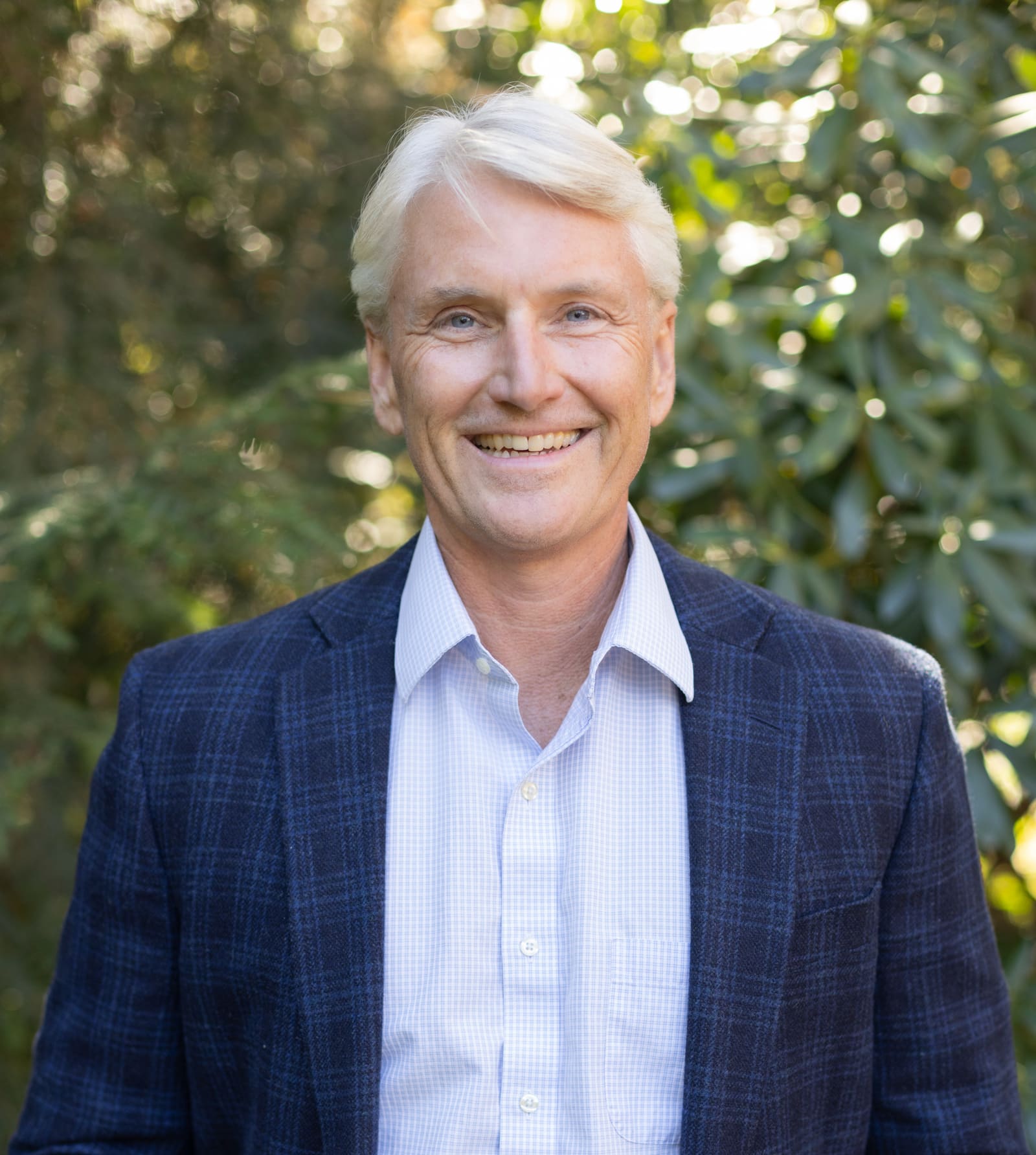

    Gus Vickery, MD, Chief Medical Officer of Peptide University

    Gus Vickery, MD

    Chief Medical Officer, Peptide University

    Board-Certified Family Medicine Physician

    Dr. Vickery brings decades of clinical practice and medical leadership in metabolic health, preventive medicine, and integrative and functional care to the design of this research.

    Full faculty profile
    Ian Justl Ellis, MD, board-certified physician and founder of Voafit

    Ian Justl Ellis, MD

    Board-Certified Physician | Founder, Voafit

    Creator of MyLevel GLP-1 Precision Dosing Engine

    Dr. Ellis works on precision GLP-1 treatment: individualized dosing, longitudinal optimization, and the practical question of how much medication a given patient actually needs.

    Full faculty profile

    What This Is

    PRISM Research & Clinical Innovation is the research incubator lab for peptide therapy. Peptide University is its education and clinical network partner. Together, we're conducting a two-part research effort on GLP-1 and incretin therapy.

    Part one, happening now. An anonymous landscape survey of prescribing clinicians and of people using GLP-1 therapy. Four-week collection window. No identifiers of any kind.

    Part two, what this makes possible. The findings from part one will define the research questions, inform the protocol, and support the IRB submission for a formal longitudinal study, including a refined lower-dose strategy.

    This first survey is exploratory research. It is not IRB-approved, it is not industry-funded, and it is not a clinical trial. It is the groundwork that makes a properly designed IRB study possible, and it depends entirely on clinicians and patients being willing to share what they've actually seen.

    Why This Matters

    The challenge with GLP-1 therapy was never just dosing.

    The challenge is that the entire field has been learning as it goes. We started with a protocol built from the original registration trials. Then came everything the trials weren't designed to capture: the plateaus, the lean mass questions, the tolerability ceilings, the downstream metabolic effects, the patients who stopped and regained, the patients who did better on less.

    Those outcomes exist. They are sitting in thousands of individual practices right now, in clinical notes and lab panels and body composition scans and the accumulated judgment of clinicians who have been figuring this out patient by patient.

    What's missing is any mechanism to bring that together in a way that means something.

    Without it, the field has:

    • No agreed-upon evidence for individualized or reduced-dose strategies
    • No shared understanding of what actually resolves a plateau
    • No consistent standard for monitoring lean mass or liver health
    • No clear picture of what happens after discontinuation
    • Wide variation in practice, with no way to know which variations are working

    Not because the clinical work isn't happening. Because the data has never been collected.

    How It Works

    Step 1

    Take the survey

    Five to eight minutes, completely anonymous. Clinician version or patient version.

    Step 2

    We aggregate and analyze

    Four-week collection window across the Peptide University clinical network and patient community, then analysis.

    Step 3

    Findings inform the IRB study

    Results define the research questions and shape the protocol for the formal longitudinal program, including refined, evidence-informed dosing strategy.

    Step 4

    Participants are invited back

    Everyone who wants to continue is invited into the next phase.

    On anonymity, plainly stated

    This Phase 1 survey does not require your name or contact information. At the end, you may optionally give permission to be contacted about future PRISM GLP-1 research. Contact fields will only appear if you choose to opt in.

    The Two Paths

    You Already Know the Problem. Help Us Document It.

    You've been managing GLP-1 patients since well before there was meaningful guidance on how to do it. You've held patients at lower doses that were working. You've adjusted schedules around tolerability. You've watched plateaus break, sometimes for reasons you could explain and sometimes not. You've made real decisions with incomplete evidence, because the patient was in front of you and the label only went so far.

    Every clinician in this field has been doing the same thing, largely in isolation.

    This survey is how we start pooling it. Twenty-five questions on what you actually do: titration approach, plateau management, adverse effects, persistence, body composition, liver health, adjunctive therapy, and where you see the biggest gaps. Your practice becomes part of a dataset large enough to answer questions none of us can answer alone.

    Peer-to-peer, aggregate-only, no patient identifiers requested. 5 to 8 minutes.

    They Asked What You Weighed. Did Anyone Ask What Happened Next?

    When the weight stopped coming off, did anyone ask what that was like? When you felt weaker, or the hunger came back, or the side effects got hard to live with? When you decided to stop?

    Those are the questions we're asking. All of them.

    Your answers go directly into research designed to make this treatment work better for the people who come after you, and for you, if you're still on it.

    Your dose and how it changed · Response and plateaus · Side effects · Muscle and body composition · Metabolic and liver health · Stopping and restarting · The one thing you'd most want to change

    Whatever you're taking and wherever you got it, we want the real answer, not the tidy one. This survey is anonymous by design so you can give it.

    Straight Answers

    Is this an IRB-approved study?
    Not yet, and that's the point. This exploratory survey is what allows us to build a well-designed IRB protocol instead of guessing at one. The formal longitudinal study will go through full IRB review.
    Who's funding this?
    No one. Phase 1 is unfunded and conducted by PRISM and Peptide University directly.
    Is my data really anonymous?
    This Phase 1 survey does not require your name or contact information. At the end, you may optionally give permission to be contacted about future PRISM GLP-1 research. Contact fields will only appear if you choose to opt in. Clinicians are asked not to submit any patient-identifying information. Results are reported in aggregate only.
    What happens to my answers?
    They're analyzed as part of the aggregate dataset and used to shape the research questions and protocol for the next phase.
    Do I have to do anything after this?
    No. Contact information is optional and is requested only from people who consent to follow-up. At the end of the survey you may give permission to be contacted about future PRISM GLP-1 research, and contact fields appear only if you choose to opt in.
    How long does it take?
    Five to eight minutes.
    PRISM Research & Clinical Innovation

    The Field Moves Forward When We Share What We're Seeing.

    Five to eight minutes. Completely anonymous. It's the first step toward evidence-based GLP-1 protocols the entire field can use.

    Peptide University x PRISM Research & Clinical Innovation
    Anonymous · Voluntary · Exploratory survey informing a future IRB-reviewed study

    We use cookies to enhance your experience.

    We use cookies and similar technologies to deliver our educational platform, analyze site traffic, and improve relevance. By continuing, you accept our use of cookies. Read the Cookie Policy.